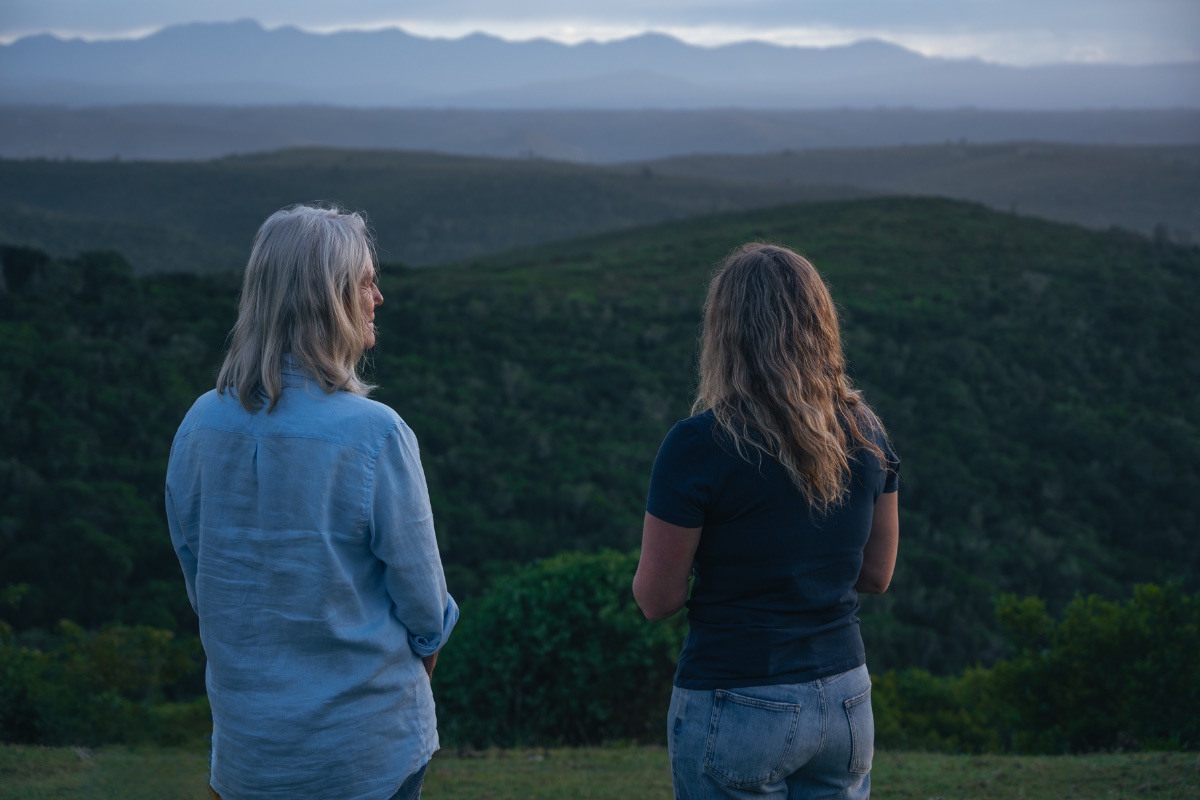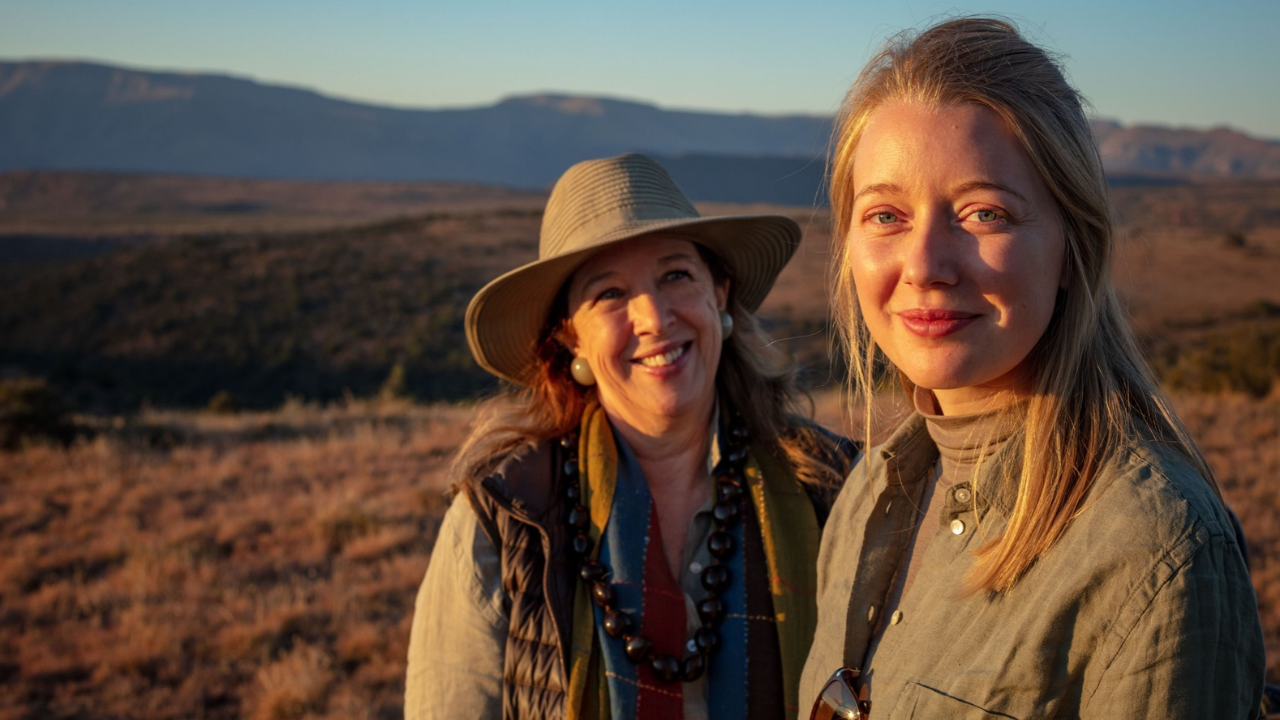
Some legacies are inherited. Others are grown into.
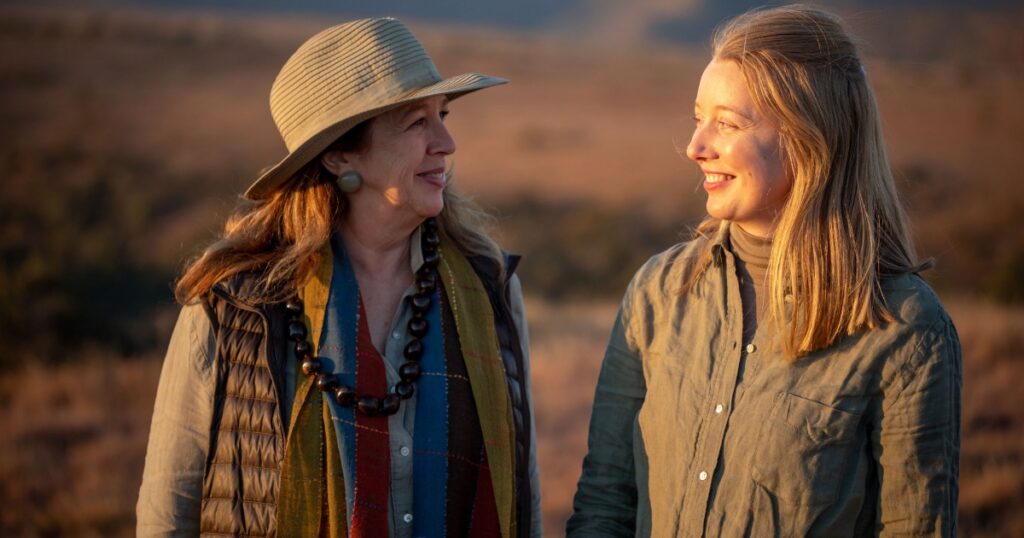
In the vast landscapes of South Africa’s Great Karoo, Sarah and Isabelle Tompkins share a connection shaped not only by being mother and daughter, but by a place they have both watched transform.
Sarah began restoring Samara when Isabelle was just five years old. As a damaged landscape slowly came back to life around them, Isabelle grew up inside her mother’s vision; exploring its mountains and rivers, witnessing the return of wildlife and absorbing, almost without knowing it, a deep sense of responsibility for the natural world.Nearly three decades later, Sarah is no longer carrying that vision alone.
The little girl who watched Samara being rewilded is now helping to shape what it becomes next.
Sarah’s journey with Samara began in 1997. Having grown up in Johannesburg with a lifelong love for the South African bush, she and her husband, Mark, travelled to the Great Karoo and encountered a landscape suffering from years of overutilised small-stock farming.
Where others might have seen depleted land, they saw possibility.
They began acquiring former livestock farms, slowly piecing together 67,000 acres with an ambitious vision: to restore the Karoo’s natural ecosystems and bring back what had been lost.
For Sarah, it was always about healing.
“This is about taking something that was hurt and that needed healing and restoring it back to what it once was.”
Across Samara, five vegetation biomes meet, creating an extraordinary diversity of habitats. But the great herds of springbok that once moved through this landscape, and the predators that followed them, had long since disappeared.
Restoring it would take time. Fences came down. The land was rested. Indigenous vegetation recovered. And slowly, pieces of the ecological puzzle began to return.
While one story of restoration was unfolding, another was growing alongside it.
For Izzy, Samara was simply home. She spent her childhood exploring its mountains, valleys and rivers, watching her parents’ vision take shape around her. Conservation wasn’t something separate from her childhood. It was part of it.
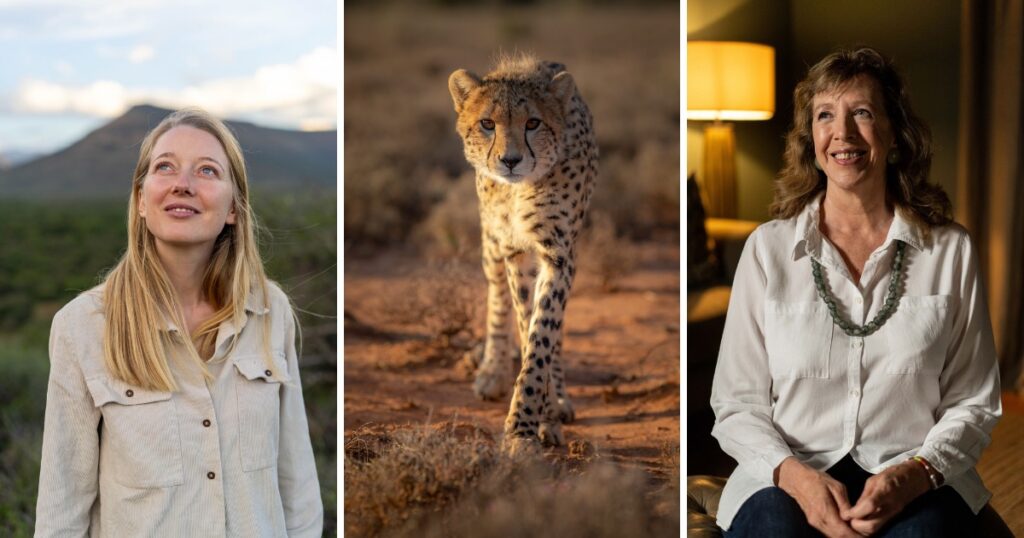
In 2004, she witnessed one of Samara’s defining moments: the return of wild cheetahs to the Great Karoo after 130 years. Sibella became the first to walk this land again; the beginning of a remarkable conservation story, and a homecoming witnessed by a young Isabelle.
There is something powerful about growing up watching a landscape heal.
Today, Isabelle has moved from being the child within Samara’s story to one of the people responsible for carrying it forward. Her work focuses on the long-term future of the landscape, its biodiversity and a model of tourism that can help protect it.
Sarah calls her a “warrior for the planet”.
But perhaps what is most powerful about their story is not simply that Isabelle has followed in her mother’s footsteps. It is that the vision has become shared.
What began with Sarah has evolved through Isabelle A mother’s belief in what a damaged landscape could become has passed, not as an obligation, but as a connection to place and a sense of responsibility for its future.
And that future continues to unfold.
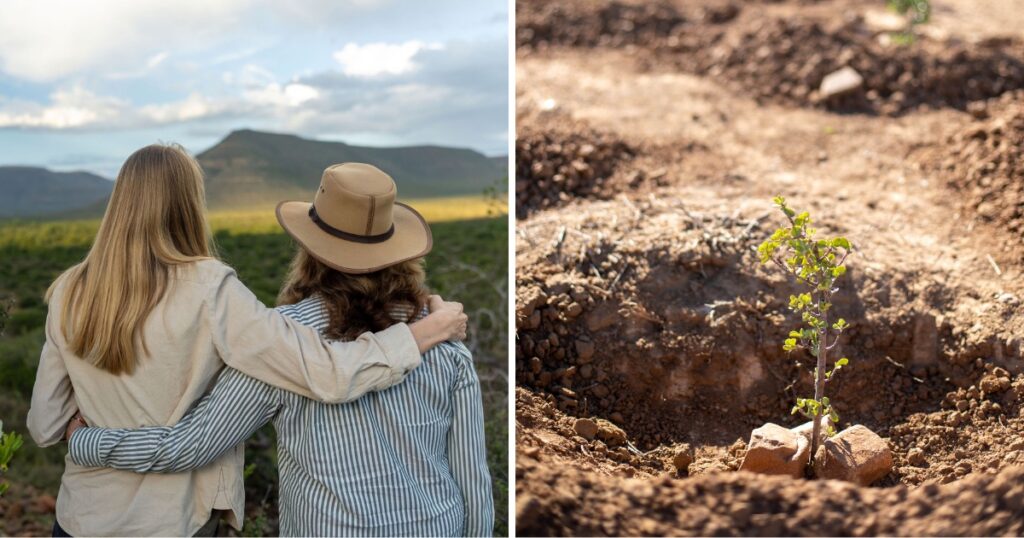
Rewilding is about far more than bringing animals back. It is about restoring relationships within an ecosystem and recognising that people are part of that ecosystem too.
Over the years, cheetahs, black rhino, elephant and lion have returned to Samara. Guests are invited into the restoration story too; planting spekboom, connecting with the soil and experiencing first-hand what it means to help a landscape recover.
That philosophy extends beyond wildlife.
Samara’s conservation model has created employment and opportunity, with women forming an important part of the workforce. For Sarah and Isabelle, protecting wild spaces cannot be separated from supporting the people and communities who live alongside them. Conservation is strongest when it is collaborative, inclusive and able to create a future for both people and place.
And their vision does not end at Samara’s boundaries.
And their vision does not end at Samara’s boundaries.
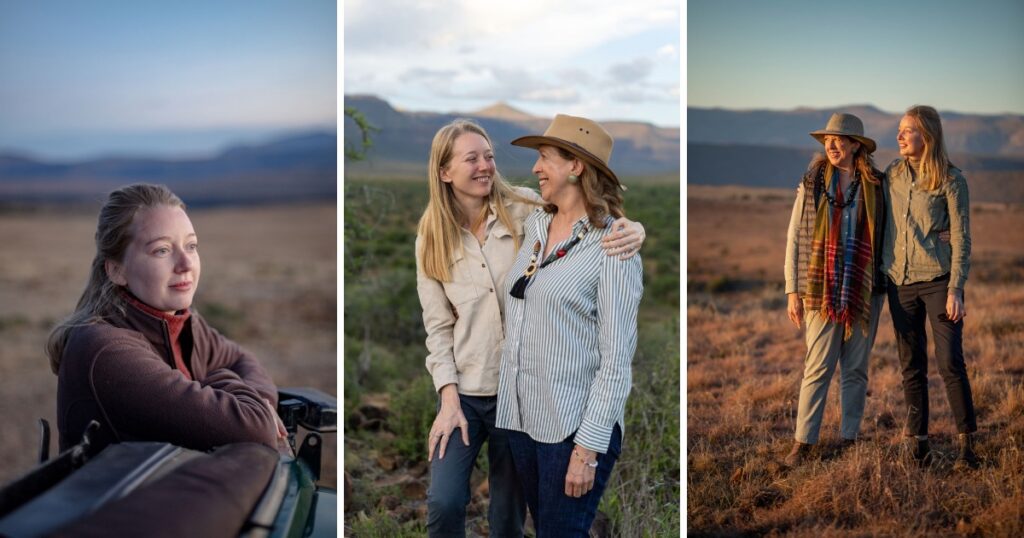
The long-term dream is to help reconnect a much larger wilderness, creating ecological corridors between three national parks and giving wildlife the space to move across landscapes once again.
It is a vision that reaches far beyond one lifetime.
“We’re not apart from nature, we’re part of nature,” Isabelle reminds us.
And that is the legacy at the heart of Samara: not simply leaving something behind for the next generation, but raising a generation that understands why it is worth protecting, and is willing to take responsibility for it.
Wildlife corridors and rewilding are at the forefront of conservation today, and there is something incredibly hopeful in seeing these two women, mother and daughter, working side by side with such determination to help make that change possible.